What is an Incremental Encoder?
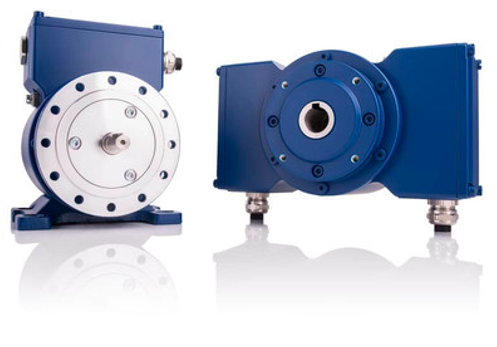
Encoders translate rotary or linear motion into a digital signal, which is sent to a controller. The controller monitors motion parameters, including speed, rate, direction, distance, or position. There are different types of encoders available, including absolute encoders and magnetic encoders, but this article will take a closer look into incremental encoders.
An incremental encoder is one of the most popular rotary encoders used. This type of encoder converts the position of a shaft or an angular motion into a digital code or analog to identify motion or position. An incremental encoder can be used in positioning and motor speed feedback applications, including servo/light, industrial or heavy-duty applications.
Incremental encoders are a favorable choice because they provide accurate speed and distance feedback and because there are only a few sensors involved, the systems of incremental encoders are both inexpensive and simple. It is important to note the limitations of incremental encoders; they can only provide change information, so they require a specific reference device in order to calculate motion.
How Does an Incremental Encoder Work?
A specific amount of pulses are provided in one rotation of an incremental encoder. The output can either be:
- a single line of pulses (an “A” channel)
- Or two lines of pulses (an “A” and a “B” channel) that are offset to determine rotation. This phasing between the two signals is known as quadrature.

The most common type of incremental encoder uses two lines of pulses or channels (A and B) to sense position. This type of incremental encoder uses two code tracks with the sectors positioned 90° out of phase. The two output channels of the quadrature encoder determine the position and direction of rotation.
A ‘Z’ channel or index can be provided for pulse count verification on the A and/or B channels. This channel can be gated to either A or B in their various states. It can also be un-gated and vary in width.
Below is a video describing how an incremental encoder works:
Incremental Encoders vs. Absolute Encoders
There are several types of encoders available, but they typically fall into two main sensing techniques or categories, namely:
– Linear
– Rotary
Within these categories, there are different encoder measurement types, including:
– Absolute
– Incremental
There are also different electromechanical technologies such as:
– Magnetic
– Optical
– Inductive
– Capacitive
– Laser
If you have heard about absolute encoders, then you may be left wondering if you should use an incremental or an absolute encoder for your specific application.
Absolute rotary encoders can measure “angular” positions, while incremental rotary encoders can measure distance, speed, and position. Incremental encoders are most commonly used to measure the speed of mechanical systems.
Huebner Speed Monitoring Incremental Encoders
The Huebner Speed Monitoring Incremental Encoders range can be deployed in a wide variety of applications to measure and monitor the speed of standard, auxiliary and secondary drives in steel and rolling mills, mining operations as well as in ports and crane systems.
These encoders are robust and long-lasting and can be used in either a solid or hollow shaft as well as a combination shaft.
The drive chain is protected against the damaging shaft currents when attaching these incremental encoders with an isolated coupling or (with optionally available) isolating hybrid bearings.
The Huebner Giessen Incremental Encoders offer a high signal quality of up to 1 million pulses in HTL, TTL, Sin/Cos, if required, for dynamic feedback control across the entire speed range. The rugged foot construction facilitates the simple attachment of additional encoders at the second shaft end.
If you require incremental encoders, then contact Huebner Giessen SA today. Let us know your requirements, and we will help you find the right solution.